Regenerative productive gardens
Make more of the land and resources already around you
LeftHand helps rural households, smallholders, community groups and landowners turn underused lawns, paddocks, shared green spaces, ponds and hedges into connected food-producing landscapes.
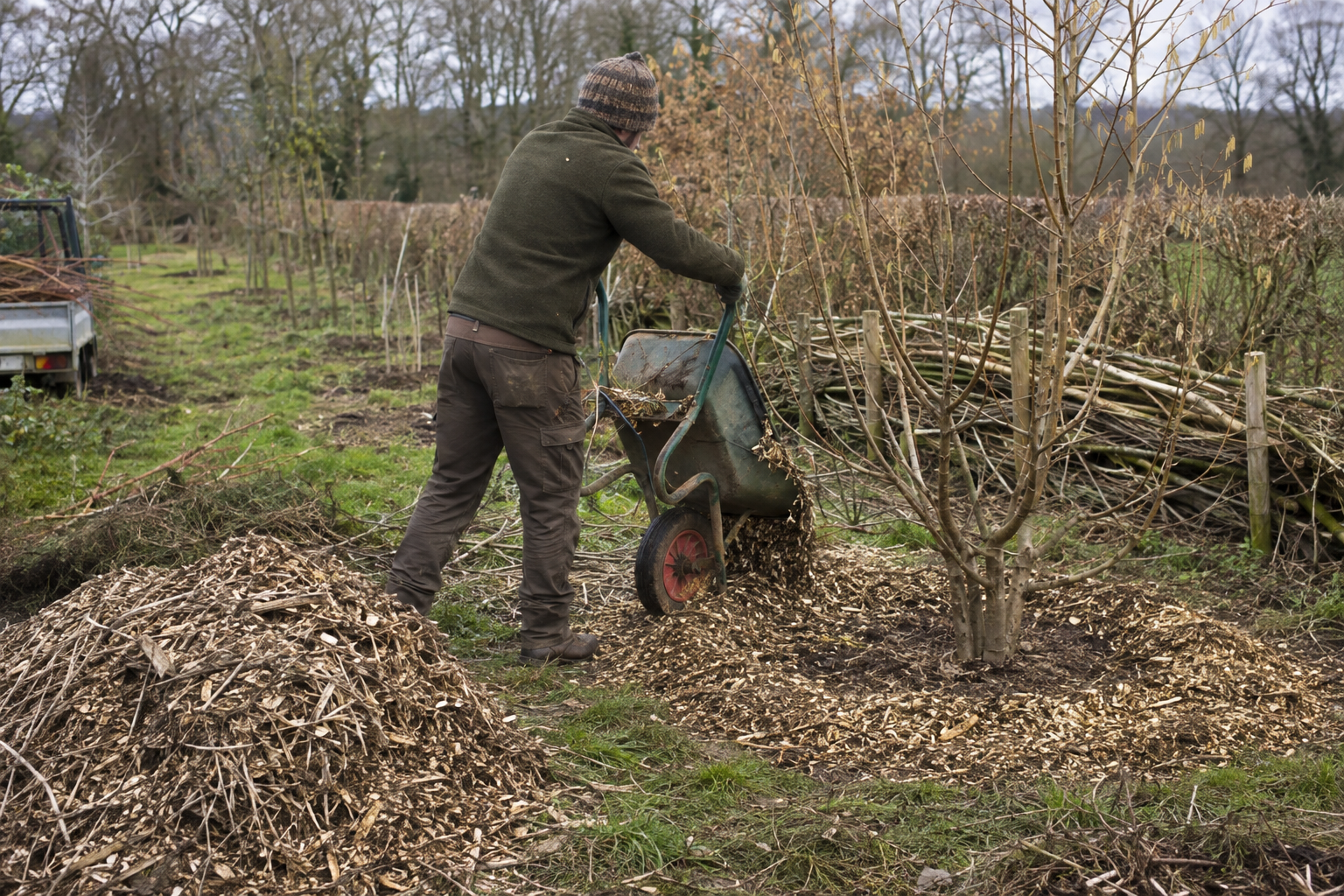
Rather than beginning with large quantities of imported soil, compost and hard landscaping, we first look at what the property already produces: water, grass cuttings, leaves, woody material, animal manure, shelter and growing space. We then design practical ways to move those resources to where they can support useful yields.
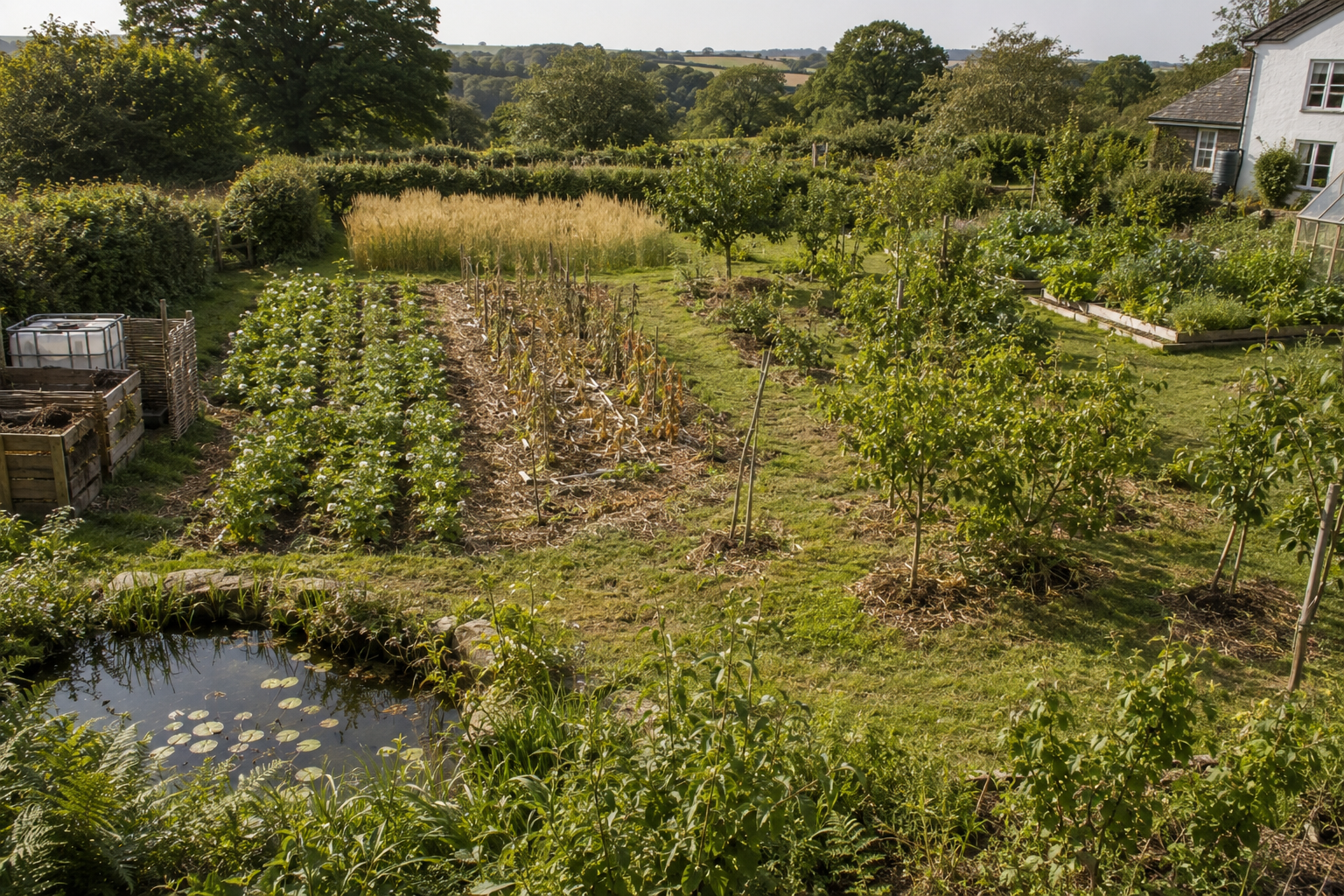
A project might begin with a wheat or vegetable plot, several fruit trees, a productive hedge or a mobile poultry system. It can remain a focused improvement or develop gradually into a more connected household food system.
A productive landscape, not a catalogue of garden features
Every site already functions as a system. Vegetation grows, trees are pruned, leaves fall, water moves and nutrients accumulate in some places while being removed from others. Our role is to understand those flows and reorganise them so that more of the site's resources contribute to food production, soil improvement and habitat.
The objective is not to promise a perfectly closed system. Food leaving the site removes nutrients and some inputs may still be worthwhile. The aim is to retain and cycle more of what is already available, reduce avoidable imports and make each new element perform more than one function.
Designed around how far you want to go
There is no minimum level of self-sufficiency required. Some clients want dependable fruit, vegetables and herbs. Others want to grow potatoes, pulses or household grain, keep poultry, use pond water in a greenhouse or establish fruit and nut systems inspired by agroforestry.
We begin by considering:
· The food your household actually wants to produce
· The time and practical involvement you want
· Existing soil, vegetation, trees, hedges and composting
· Sources of water and nutrients
· Cut material and other biomass currently treated as waste
· Opportunities to combine crops, poultry and perennial planting
· Harvesting, processing and storage
· A realistic first phase and how it could develop later
Stacking crops, animals and management
Productive systems do not need a separate permanent area for every function. The same ground can provide different outputs across a season or rotation.
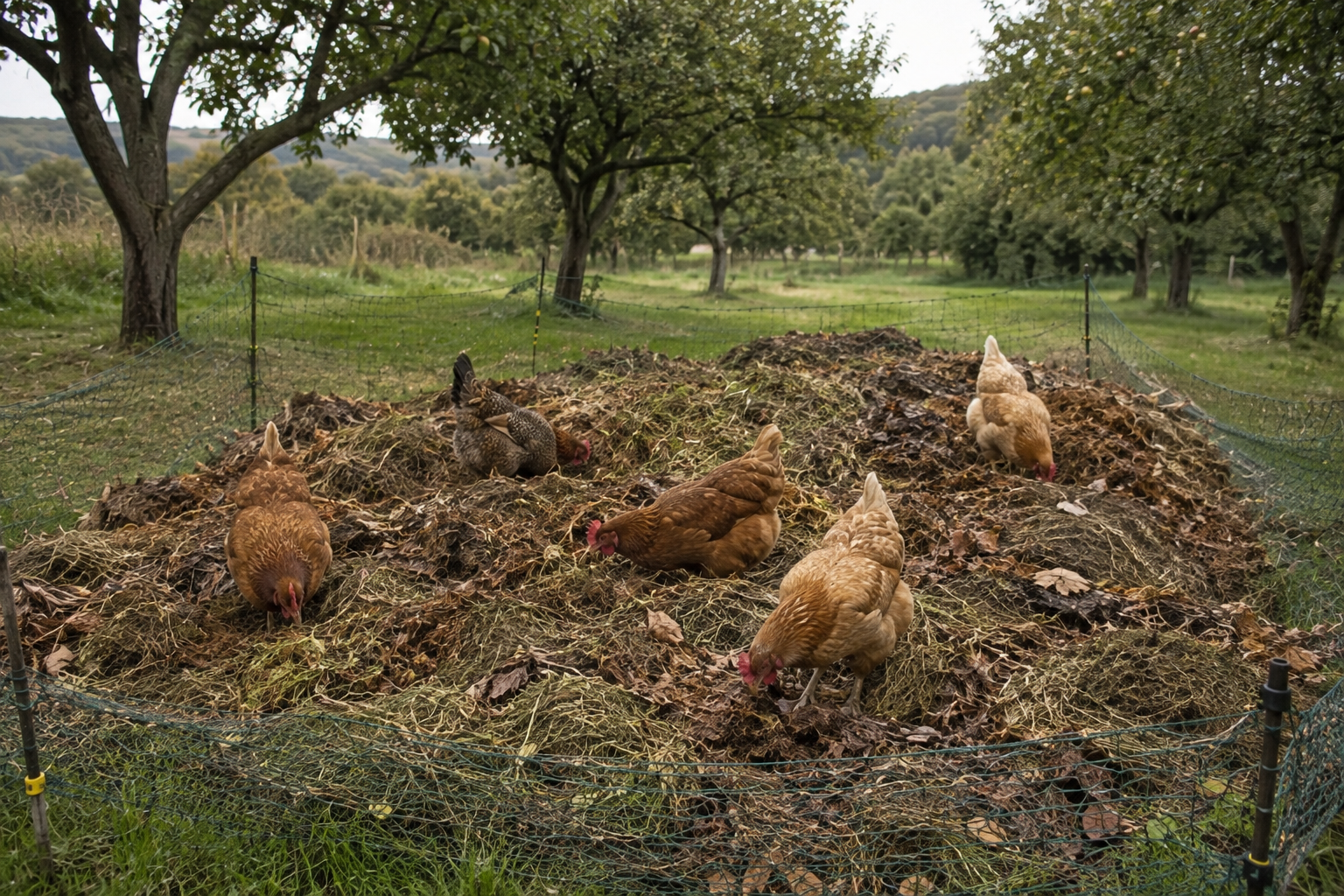
A mobile poultry system can follow a harvested grain or pulse plot, collecting spilled seed, disturbing residues and adding manure before the next crop. Poultry can also work through suitable composting material, graze beneath established orchard trees or prepare a future growing area, provided their movement is timed to protect soil, plants and animal welfare.
Fruit and nut trees can stand above seasonal crops or poultry rotations. Berries can occupy tree rows and boundaries. Productive hedges can supply food, shelter, biomass and habitat without requiring a separate central plot. This resource stacking is central to the design rather than an optional extra.
What can be included?
· Ground-level wheat, grain, potato and pulse plots
· Kitchen vegetables, herbs and perennial crops
· Fruit and nut trees
· Soft fruit and productive shrub planting
· Productive hedges and shelterbelts
· Mobile poultry tractors and crop rotations
· Compost, leaf mould and biomass-processing areas
· Pond-fed irrigation and nutrient-recovery systems
· Greenhouses or polytunnels
· Rainwater storage and low-input irrigation
· Crop protection, practical access and processing areas
· A phased plan for future development
Community-owned and shared land
Land protected or managed by local residents can become more than an area kept free from development. With a proportionate plan, it can provide food, wildlife habitat, outdoor learning, shared activity and a practical reason for people to remain involved in its long-term care.
LeftHand can work with residents' groups, community land trusts, parish and town councils, schools, charities and other local organisations. Projects can range from a community orchard or productive hedge to a connected growing, composting, water and habitat system.
· Community orchards, fruit and nut planting
· Shared vegetable, potato, grain and pulse plots
· Productive hedges and boundary restoration
· Meadows managed for hay, habitat or communal use
· Composting and use of vegetation arising on the site
· Rainwater, pond and irrigation planning
· Accessible growing areas and practical working routes
· Volunteer-friendly maintenance plans and phased workdays
· Indicative budgets and information to support funding applications
· Long-term establishment and seasonal contracting support
A plan people can maintain together
Community projects need more than an attractive layout. The design should define who can make decisions, which tasks require a contractor, what volunteers can safely undertake, how produce will be shared and how the site will be maintained when initial enthusiasm changes.
We can begin with a site walk and facilitated discussion, then develop a phased plan that gives the group an achievable first project while protecting space for future ambitions. This can help a newly formed landowning group move from protecting land to caring for it with a shared purpose.
Let’s Work Together
If you’re interested in growing more of your own food, please get in touch and tell us about you, your area, and what you would like to achieve and we’ll get back to you as soon as possible.